
Entertainment
Cicely Tyson: BET And CBS News To Honor the iconic legend With Primetime Special


BET, in partnership with CBS News, announced a new primetime exclusive special honoring the life and legacy of iconic actress Cicely Tyson. Hosted by CBS This Morning anchor Gayle King, “BET + CBS News Present Cicely Tyson: In Her Own Words” will feature extended excerpts from one of the legendary actress and fashion model’s last interviews, in which she reflects on her trailblazing and illustrious 70-year career across television, film and theater, including being the first Black actress to co-star in a television drama series, East Side/West Side, to her Emmy award-winning performance in The Autobiography of Miss Jane Pittman (1974), Tony award-winning role in The Trip to Bountiful (2013), receiving an honorary Academy Award (2018) and recent induction into the Television Hall of Fame (2020). Her influence transcends beyond the screen and stage into many other facets of American culture. We join so many in celebration of her life, legacy and immeasurable contributions to the representation of African Americans, specifically Black women in the media. “Cicely Tyson: In Her Own Words” premieres Sunday, January 31 at 7:00 PM ET/PT on BET and 8PM/7C on BET Her.
BET celebrated Tyson’s incredible work at BET Honors 2010 and Black Girls Rock! 2015. Watch her BET Honors 2010 tribute here:
Culled from Bet News
Art
Beyoncé’s Album of the Year: A Lesson for Nigerian Musicians, by Allah-Bama (Part 3)
Fela Kuti, once a band boy of the late Victor Olaiya, transformed his musical style. Instead of adhering to Highlife’s conventional three major triad chords, he ventured into Afro Jazz, which was rooted in a minor-triad and major chord. For instance, “Lady” featured only a two-chord pattern, as did “Palava. ” Most of his songs were composed using just two chords. These two chords’ rhythmic interplay, heavy percussion, and prominent horn lines made his music distinctive
Growing up, I learned that the popular Nigerian music style originates from the traditional sound of palm wine music. It wasn’t until I joined Yom Yem & The Band Of Distinction that I learned how this genre evolved into Highlife. In 1989, I played the keyboard during a recording at the Nigerian Television Authority Headquarters in Victoria Island, Lagos, where some of Nigeria’s greatest Highlife legends performed in various episodes. Witnessing them up close during rehearsals allowed me to learn the chord progressions characteristic of Highlife music. Playing the keyboards while standing behind Victor Olaiya, I.K. Dario, Eddy Okonto, Dan Mariya Jos, Victor Uwafor, and many other greats was an honor and a privilege. My bandleader, Yemi Ogunsanya, also known as Yom Yem, produced that remarkable show.
My band, Yom Yem and the Band of Distinction performed songs made famous by artists such as Bobby Benson, Victor Olaiya, Eddy Okonta, Fela Kuti, Roy Chicago, Celestine Ukwu, Joe Mensah, Rex Lawson, and others. We also performed International contemporary songs. Among the songs that stood out during our performances were “Bonsue” by the late Joe Mensah, “Love Mu Adaure” by the late Rex Lawson, “Taxi Driver” by Bobby Benson, and “Oni Dodo, Oni Moimoi” by the late Fela Kuti and the Koola Lobitos Highlife.
Fela Kuti, once a band boy of the late Victor Olaiya, transformed his musical style. Instead of adhering to Highlife’s conventional three major triad chords, he ventured into Afro Jazz, which was rooted in a minor-triad and major chord. For instance, “Lady” featured only a two-chord pattern, as did “Palava. ” Most of his songs were composed using just two chords. These two chords’ rhythmic interplay, heavy percussion, and prominent horn lines made his music distinctive.
While some instrumentalists might view his style as overly simple or essential, Fela’s intricate solos and chord progressions showcased his immense talent, firmly establishing him as one of Africa’s greatest musicians. When the late Fela transitioned away from Highlife, he surpassed his contemporaries, including those who had taught him to play music. (When discussing the transformation and evolution of the late Fela Kuti’s music, we often overlook the crucial role played by Tony Allen, the Nigerian and French drummer, composer, songwriter, and musical director who helped shape his sound. While some may attribute Fela’s accomplishments solely to him, it is important to recognize that Tony Allen crafted the beats primarily rooted in Soca, Calypso, Modern Highlife, and Jazz. )
Similar to Beyoncé, the late Fela Anikulapo Kuti did not confine himself to Highlife; he became a legend when he revolutionized his style, incorporating a Calypso kick drum pattern, a steady snare, and a variety of indigenous percussion instruments. This shift forever altered his musical signature. Breaking away from the status quo allows one to become an actual creator endowed with profound musical insight. By evolving and transforming your style, you ensure your enduring presence in the industry, regardless of the circumstances. While the late Fela Kuti remained devoted to AfroJazz until his last breath, it remains uncertain whether Beyoncé will stay committed to her new style. There is nothing preventing her from exploring other genres and producing hits regardless of the music she chooses to create.
Growing up, I also closely observed how my uncles and older sisters dressed in high heels while the men wore bongo trousers and heeled shoes. During that time, men emulated their favorite musicians, making waves in the industry. It was an era dominated by Musical bands, with solo artists being less prominent. I watched as my older siblings prepared every weekend to attend shows by their favorite bands, a hallmark of the 1970s.
Some well-known bands from that era included The Apostles, Sweet Breeze, One World, Semi-Colon, The Winds, Original Winds, The Funkies, and Super Winds, all based in Eastern Nigeria. I noticed that while my uncles enjoyed music from these bands, their songs often sounded quite similar. Nevertheless, Sweet Breeze became my favorite. I later learned that the popular music style at the time was funk. The late Spud Nathan stood out as a breakout star among these bands. His music moved me to tears; he was undeniably talented but sadly passed away far too young. Unfortunately, none of these bands succeeded in carrying their legacy into the next generation, as they all faded away.
In 1978, Bongo Ikwue released the megahit “Still Searching,” Cliff David led Cloud-7 with the superhit “Beautiful Woman.” Their music offered a fresh perspective to the Nigerian pop scene, marked by various beautiful releases. In 1980, Chris Okotie burst onto the scene with a thunderous track entitled “I Need Someone.” I was in Ilorin when he released this hit, and I even attended his concert as a teenager. It was my first concert experience, and I was struck by Okotie’s musical style, which blended Western influences. His album included a cover of James Taylor’s “In My Mind, I’m Gone to Carolina.”
During that time, artists like Felix Liberty, Jide Obi, and Dizzy K were all striving to make their mark. Despite their efforts, none surpassed or matched the threshold set by Chris Okotie. While they tried, his impact ultimately remained unmatched. Oby Onyioha also had hits, including “Enjoy Your Life” and “I Want to Feel Your Love.” It wasn’t until 1986, with the release of “One Love” by Onyeka Onwenu, that the Nigerian pop music scene truly ignited with energy.
To Be Continued
Allah-Bama is a New York City Based Musician.
#Aguike-Facebook
#https://www.tiktok.com/@allahbaama
#https://wwwfacebook.com/aguike
@allahbama-IG

As the rhythm played on, it reached a point where tuning into New York Lite FM, Hot97, or 105.1 will invariably introduce you to Nigerian music. Turn on Z 100, New York’s most popular radio station, and you will undoubtedly hear delightful songs from Nigeria. I emphasize “Nigerian” because 99.9% of the African music featured on these stations originates from Nigerian artists. The rise of Nigerian music on international airwaves can be attributed to a multitude of talented artists from Mavin Records, led by Don Jazzy, Empire Records D’Banj, Burna Boy, Wizkid, Davido, Rema, Fireboy, and Tems, who have all become household names in America. You’ll hear Nigerian music energizing group workouts if you visit popular gyms in New York. This trend is also evident in many other influential countries around the globe.
I recall 2009 when I launched NigerianFM, broadcasting from New York. Weekly, I featured new releases from Nigeria. By 2010, this trend had intensified, and by 2014, hundreds of new Nigerian singers were releasing singles bi-weekly, or even weekly. Eventually, I found it increasingly challenging to keep track of all the latest releases and artists’ names. 98% of them might not progress far due to the stylistic similarities in their music. As it evolved into a survival-of-the-fittest scenario, it became evident that financial backing was crucial for promoting music. Radio DJs sought out artists with substantial financial resources. Historically, the Nigerian music industry has transformed every decade; those who survive into the next must possess the resources to sustain themselves and allocate a significant budget for promotion. Record labels barely invest in music education or hire professional songwriters for their artists. Most performers, predominantly solo artists, lack music directors and, in many cases, basic knowledge about the key signatures of their songs. Rather than experiencing a surge, our music is diminishing in popularity overseas.
I have previously warned about our music following the fate of Nollywood. There was a time when our films were must-watch attractions, and our actors were revered overseas, with fans queuing for hours to see them whenever they visited. African film producers would cover their transportation and accommodation costs to feature them in movies. Many Nigerian actors earned significant income from producers based abroad. Movie rental shops were proliferating across America. While streaming services have impacted Nollywood, if producers, directors, and screenwriters had collaborated and pooled resources, Nollywood movies could have dominated box offices internationally. Instead, movie producers and production companies intensified their competition, focusing on quantity over quality. Consequently, the standard of storytelling began to decline, with producers recycling stories or borrowing plots from films made overseas.
I vividly remember bringing a group of friends to promote a Nigerian film. Halfway through the screening, someone pointed out that the film was essentially a copy of “A Thin Line Between Love and Hate,” featuring Martin Lawrence. After that experience, I lost interest in Nigerian movies, weary of the repetitive themes. The same narratives about herbalists and African juju became tiresome. Within months, my neighborhood’s central African film stores began to close. Even before the rise of Netflix, Nollywood struggled due to poor production quality and a lack of creativity in scriptwriting and direction.
As I mentioned earlier, the rush for Nigerian music overseas is diminishing. You no longer hear fresh Nigerian songs on the favorite FM stations here in New York, the world’s music capital. The recent trend of new Nigerian solo artists gravitating towards the Amapiano genre could be a significant factor in this decline; you cannot play a genre better than the South African musicians who originated it. It’s impossible to claim ownership of a genre that naturally belongs to them. No amount of money spent on Nigerian radio stations and DJs will ensure you become an international breakout star by imitating a genre that is firmly rooted in South Africa.
You cannot reintroduce a genre closely associated with South Africans to the global stage without authenticity. It’s important to acknowledge that South African film production has significantly outpaced music production in Nigeria for many years. South African choreographers possess superior creativity, experience, and skill than Nigerian dance instructors. Regarding video production quality, South Africa is far ahead of what we produce in Nigeria. I don’t mean to undermine our talented studios and sound engineers in Nigeria; I am just stating the truth. A visit to South Africa will reveal this disparity. South Africa has historically struggled with the financial resources needed to promote the best aspects of their local entertainment industry. At the same time, Nigeria has leveraged its economic power and hype, alongside the millions of Nigerians living abroad, to shape trends that often become our defining style, even though the true origins of these beautiful musical styles may go unrecognized.
TO BE CONTINUED.
Allah-Bama writes from Bayside, New York City.

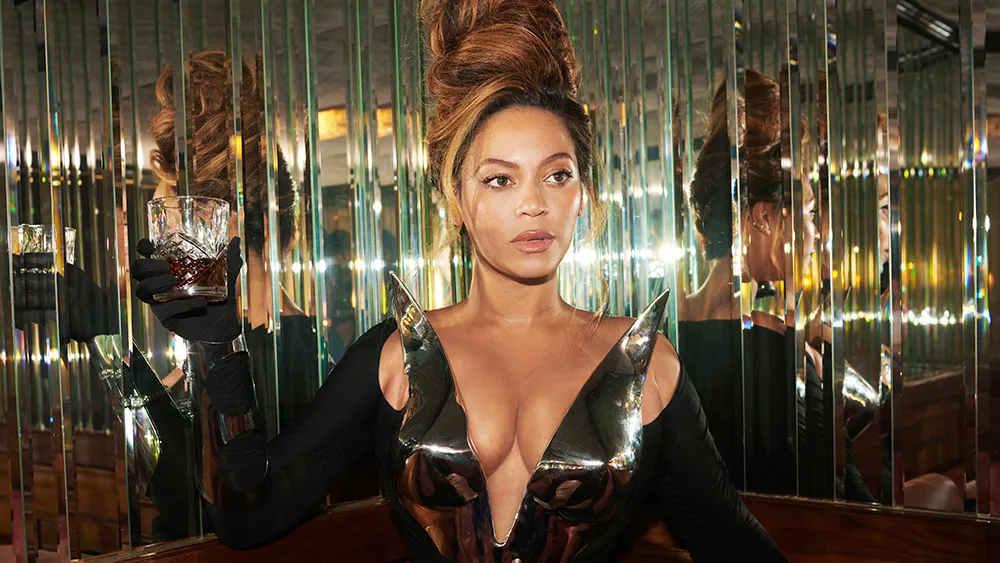
As of February 2, 2025, at the Crypto.com Arena in Los Angeles, California, Beyoncé—without a doubt one of the most outstanding performers of our time—had won nearly every accolade imaginable, except for one: the Grammy Award for Album of the Year. That changed when she ventured beyond her usual genre to release a country album titled Country Boy Carter. This album ultimately transformed her career; she finally took home the Album of the Year award, which had eluded her for years since the beginning of her career.
That February morning, I was in a heated discussion with a good friend who expressed her disdain for Beyoncé’s Cowboy Carter. She questioned how Beyoncé could turn to country music, asserting that the genre was strictly for Southerners, honky-tonk musicians, and hillbillies. I reminded her that Black people were the original cowboys and pointed out that Beyoncé hails from Houston, Texas. Despite my arguments, she remained steadfast in her opinion. I explained that music is a universal language that transcends genre, style, race, age, sex, religion, and dialect. A well-crafted song can be adapted to any genre. The only artists who confine themselves to a single style are those who rely heavily on their producers and record labels to dictate the type of music that will fill their bank accounts. I cited Taylor Swift as an example—she began her career in country music but has since explored country rock, slow rock, and pop.
My friend was simply unaccustomed to the sound of Cowboy Carter, which was a stark departure from Beyoncé’s established style. I also noted that artists like Mariah Carey and Ariana Grande often perform gospel music during Christmas, showcasing their versatility.
When Beyoncé won her first-ever Album of the Year award on February 2, 2025, around 10 PM EST, it solidified her place in history as one of the greatest artists of our time. At that moment, my friend began to appreciate the points I had made earlier that morning: music transcends all boundaries, and any musician worth their salt should not allow themselves to be pigeonholed by promoters or their record labels. Diversifying one’s musical repertoire is essential.
This brings me to the state of Nigerian musicians, of which I am a part. Some might argue that I should define my brand and discuss African music as a whole. However, the reality is that Nigeria stands out as the only country—both in Africa and globally—where label owners, music producers, radio DJs, and the public expect every artist to imitate the genre of a popular musician. We are a nation that tunes into beats from other parts of Africa and quickly claims them as our own. Even in our dance styles, we began imitating rhythms from East and Central Africa fifteen years ago. It became commonplace to see Nigerians incorporating Congolese and Cameroonian dance moves.
When artists like Davido & others entered the scene, they referred to their musical style as Afro-pop, while rappers identified their genre as Afro-hip-pop. Over time, the term Afrobeat emerged as the dominant description. In Nigeria, where musicologists are few and far between, entertainment journalists credited the late Fela Anikulapo Kuti as the creator of Afrobeat. While Fela was a revered figure and the genre gained international acclaim, those who understood that Fela’s music was rooted in Afro-jazz often remained silent. Fela resisted incorporating digital instruments into his music and preferred analogue recording methods with his band, rejecting the digital sound that can sometimes reduce music to a superficial level.
Today, the shift to digital music production has adversely impacted the Nigerian music industry, making it increasingly difficult for professional musicians like guitarists, bassists, and drummers to make a living. As live performances decline, many of these artists are struggling. Afrobeat is often produced with minimal percussion and heavy electronic instrumentation, which seems to dominate the soundscape that audiences have come to expect. Traditional elements such as heavy kick drums, snare drums, and natural congas have become increasingly rare.
As a result, listeners tend to only want music that resembles what they are accustomed to, regardless of the artistic integrity behind it. In Nigeria, breaking new ground or crafting high-quality music is often unappreciated; many prefer to see artists recycle successful hits rather than innovate. The cycle persists.
To be continued.
Allah-Bama is a New York-based musician.
Entertainment
PMAN: Between Greed, Corruption, & Leadership By Aguike, alias Allah Bama.
In the concluding section, I will discuss the roles that Tee Mac, Oritz Wiliki, Waleman, and others played in undermining significant revenue that could have benefitted PMAN. More on this coming soon.
Aguike, also known as Allah Bama or Emma Agu, is an award-winning musician, music producer, businessman, and media personality. He is the President of US Global Media, LLC, located in Bayside, NYC.

The founders of PMAN and those who wrote its constitution aimed to replicate the functions of the American Federation of Musicians (AFM). The AFM negotiates fair agreements, protects ownership of recorded music, and secures benefits such as healthcare and pensions. PMAN could have served as a beacon of hope for musicians as they face the challenges of aging. For many years, however, PMAN, which should have served as a beacon of hope for Nigerian musicians, has been hindered by infighting since its inception.
It is well-established that PMAN, with its rich history and legacy, has long been linked with leaders who were accused of defrauding the Association. Over the years, the Association has witnessed the rise of individuals whose primary interest lies in exploiting PMAN for personal gains. While many Nigerian musicians continue to face poverty, a select few see the Performing Musicians Employers Association of Nigeria (PMAN) as their territory. They are willing to undermine the Association at any cost to control the activities of PMAN.
The battle for the soul of the Performing Musicians Employers Association (PMAN) has entered a new phase in recent years. Observers and music analysts argue that most leaders of PMAN, both past and present, lack integrity. They contend that pursuing profit from the brand has been a primary motivation for these individuals to take on leadership roles. Furthermore, no past PMAN president has been held accountable for financial mismanagement since its inception, leading many musicians to declare that enough is enough. The struggle for control of the Performing Musicians Employers Association of Nigeria (PMAN) became entrenched in corruption, prompting numerous unproductive musicians and card-carrying members to explore opportunities to sell the Association to the highest bidder. Their priorities shifted from restoring order within PMAN to identifying potential allies who could facilitate a takeover and provide financial backing.
At the forefront of the ongoing battle for the soul of PMAN is Tee Mac Omatshola Iseli, who claims to be its founder and father. He insists to anyone who will listen that he is the legitimate President of PMAN. Tee Mac Omatshola Iseli has been accused of being a puppet for Charles Oputa, the individual who initially helped to elect his predecessor, Bolaji Rosiji. Allegations against him include redirecting all PMAN projects to his own company and selling part of the land allocated by the Federal Government of Nigeria to musicians to House on the Rock. He took out a loan of 5 million Naira and subsequently defaulted on the repayment, resulting in PMAN owing over 100 million Naira in interest to the bank. Additionally, he has been accused of diverting millions of Naira that had been allocated to the association by the Niger State Government. (It is important to note that these allegations have yet to be proven).
TeeMac denied leasing the land, and when I inquired about how he originally obtained the documents that were kept in the bank vault, he stated that the Inspector General of Police had ordered him to appear in Abuja with the documents. He claimed that the Inspector General of Police then handed the documents to the current President of PMAN, Pretty Okafor. Additionally, many members accuse veteran musician Oritz Wiliki, the President of the Musicians’ Collecting Society of Nigeria (MSCN), of conspiring with Tee Mac Omatshola Iseli concerning this land sale.
Only in 2022 did a sitting president and his executive team acquire a Secretariat and initiate several critical projects on behalf of the Association. Unfortunately, this acquisition incited outrage among members instead of bringing joy: “How dare they sell our land to buy us a house?
The current President of PMAN, Pretty Okafor, along with his executives, stated, “One of the past Presidents might have leased the land out. ” A church known as House on the Rock has been operating there for many years. But who granted House on the Rock the authority to establish a church on the land designated for Nigerian musicians? This crucial detail remains unresolved, and all parties involved have yet to address it. As they continue to infight and blame shift, the truth about who originally sold the land becomes increasingly obscured, and the chances of uncovering the responsible individuals continue to dwindle.
Additionally, the governors of the various PMAN chapters in Nigeria, representing the National Executive Committee of PMAN—the most influential power block within the organization—asserted that the sellers and negotiators lacked their mandate. The current President stated, “There was no NEC when the deal was sealed. I was operating under a court order”.
The question arises: How did Pretty Okafor emerge as the President of PMAN in 2014? What motivated this ascent? Was a desire for wealth and control over PMAN’s assets that led him to seek a consent judgment in court? It was reported that in 2014, during the turmoil at PMAN’s headquarters that caused the association to split into various factions, Dr. Kenny George, a lifelong PMAN member and executive, approached Pretty Okafor and instructed him on how to take over PMAN. Another significant figure in PMAN who facilitated Pretty Okafor’s takeover was Dr. Zimakoy. He recounted how Dr. Kenny George introduced Pretty Okafor to him, and he took all necessary measures to anoint him as the flag bearer of PMAN during that period of crisis. Both enablers claim that he chased them out once he (Pretty Okafor ) perfected the act of taking over PMAN and recognized the potential to earn millions of Naira from the association. Conversely, Pretty Okafor claimed that both men had ulterior motives. He maintained that their intentions revolved around financial gain and the belief that they could use him as a mere rubber stamp for their ambitions.
It was said that Pretty Okafor converted part of his office into PMAN’s secretariat and approached an industrial court, using the names of prominent Nigerian musicians to obtain what is referred to as a “consent judgment.” According to Sunny Neji, a veteran Nigerian musician who later teamed up with Pretty Okafor, he never sought their approval before using their names. Pretty Okafor was able to enlist notable Nigerian music stars like Zaaki Azzay, Ruggedman, and others. They indicated that Pretty Okafor brought them in as recognizable figures to gain credibility and recognition, asserting their presence was instrumental in facilitating whatever progress Pretty Okafor achieved.
Pretty Rolland Okafor’s leadership of the National Working Committee (NWC) of PMAN received a staggering 620 million Naira from House on the Rock for selling one acre of land that the Federal Government gifted to Nigerian musicians in 1989. While various PMAN leaders were aware of this land, they were not in a hurry to develop it or engage any developers or investors. It is reported that once Okafor received a judgment from the Industrial Court, he began using this ruling as leverage to pursue all of PMAN’s assets, focusing on the three acres of land in Abuja. Some members of his NWC claimed that it took months for them to learn about the land, while Okafor was aware of it from the beginning.
He even enlisted the help of the Inspector General of Police to summon Tee Mac and veteran reggae artist Oritz Williki to Abuja to produce the necessary documents. After obtaining the documents, he targeted House on the Rock, which occupied one of the three acres. Initially, he planned to demolish the building, but ultimately, House on the Rock approached him with a deal. In total, 620 million Naira was paid, but tensions arose soon after the funds were received.
According to Okafor, he initially offered his NWC members 10 million Naira each, but they rejected this amount. He then offered them 30 million Naira, which they accepted. When asked if they deserved the money, he affirmed that it was meant to cover their sitting allowances. Pretty Okafor said trouble ensued when they requested that he share the entire proceeds, a claim that all NWC members vehemently denied. Some members alleged that Okafor took 100 million Naira for his sitting allowance and that they had collectively agreed to purchase a secretariat for 135 million Naira. Additionally, they claimed that another 70 million Naira was spent on radio equipment without the necessary licensing.
They also alleged that a developer, currently constructing an estate on the remaining two acres, paid over 230 million Naira directly into Okafor’s bank account. According to the NWC members, Okafor sought to retain a substantial 30% cut from the entire deal, arguing that he facilitated it. This raised concerns among the NWC, as they felt that the asset sold rightfully belonged to PMAN rather than an external deal.
Due to these disagreements and related issues regarding his unilateral decision-making, Okafor began to operate independently. He would travel without informing his first Vice President or other NWC members, and his relationship with his Vice President deteriorated to the point where he made decisions without consulting anyone. This pattern of behavior extended to virtually all other members of his NWC.
According to Sunny Neji, Pretty Okafor stopped convening meetings of the National Working Committee (NWC) and effectively cut them off, running the secretariat as a one-man show. This situation created a toxic atmosphere that brought the NWC to a standstill.
The breaking point came when he took non-registered members of the Performing Musicians Employers Association of Nigeria (PMAN) to Spain for the Rototom Sunsplash festival that sought the participation of the best Nigerian musicians. He allegedly collected money from nearly 30 individuals and secured visas for them to travel to Spain. Reports indicate that none of those he took with him, aside from his wife and son, returned. He is accused of engaging in human trafficking and visa racketeering, exploiting his position as PMAN’s President to obtain visas for those who paid him. The NWC decided to issue him a query, which he addressed, but ultimately, he was suspended from the association.
It is important to note that I have engaged in discussions with Pretty Okafor, Sunny Neji, Zaaki Azzay, Aita Bonny, Ruggedman, Asha Gangali, and others. Their statements are immutable, and no one can claim he was misquoted. (The links to Vote Notes). The responsibility now lies with Nigerian musicians, domestically and abroad, to discern who is truthful and who is lying. The issue at stake involves the Performing Musicians Employers Association of Nigeria Under Pretty Okafor’s regime, it seems that the most significant corruption scandal in the Association’s history is just beginning to unfold.
When I started addressing these issues, I anticipated attacks from various quarters. I was taken aback when Pretty Okafor, who had praised my efforts just a few days prior, resorted to instructing his lawyers to dig up dirt on me in hopes that something would stick. After his attorney’s attempts to tarnish my reputation failed, he directed the state chapters of PMAN—and those loyal to him—to report me to various police commands for alleged cyberbullying. I find it absurd to classify a quest for the truth as cyberbullying. I am a member of PMAN and a world-class musician who served the Association in various roles in the 1990s, and I possess every right to ask questions and seek the truth. Pretty Okafor’s efforts to undermine my op-ed speak volumes.
Since its formation, PMAN has been embroiled in one controversy after another, primarily concerning financial mismanagement. Some argue that he is being unfairly targeted as scrutiny increases on Pretty Rolland Okafor’s activities. His supporters contend that if an investigation is warranted, it should encompass all leadership, starting with the regime led by Tony Okoroji. However, critics argue that Okafor’s primary motive for accepting the leadership of PMAN through a court order—despite not being a card-carrying member—was greed and a desire to seize PMAN’s assets. They assert that he currently claims that the only property acquired from PMAN’s land was purchased with his commissions, and, having stated that PMAN owes him 350 million Naira, he might eventually claim that his funds were used to construct an estate for PMAN.
Aguike, also known as Allah Bama or Emma Agu, is an award-winning musician, music producer, businessman, and media personality. He is the President of US Global Media, LLC, located in Bayside, NYC
-

 latest news2 years ago
How FBI nabbed Frank Ikechuwku newly elected Chairman of Chairman of Ogbaru LGA in Anambra state!
-

 Art2 years ago
Beyoncé’s Album of the Year: A Lesson for Nigerian Musicians, by Allah-Bama (Part 3)
-

 Entertainment2 years ago
PMAN: Between Greed, Corruption, & Leadership By Aguike, alias Allah Bama.
-

 Inside America2 years ago
New York City: The Aftermath of Donald Trump’s Victory-allah-bama reacts
-

 latest news1 year ago
Ghanaian National Kidnapped in Nigeria Begs for Mercy (See full Video)
-

 Art2 years ago
Beyoncé’s Album of the Year: A Lesson for Nigerian Musicians, by Allah-Bama (Part 2)
-

 Art1 year ago
Justice for Late Gospel artist, Osinachi, Husband sentenced to death.
-

 Art2 years ago
Beyoncé’s Album of the Year: A Lesson for Nigerian Musicians, by Allah-Bama-(Part1)
-

 Featured2 years ago
op-ed: My Encounter with a Rogue Asylum Seeker-Musician AGUIKE speaks
-

 latest news1 year ago
Nigerian Police detention of PMAN leaders: gross injustice and coverups