Artist PR
The job description of a recording label PR
(Public Relations) professional involves managing the public image and communication strategies of a music recording label. Their primary role is to promote the label’s artists, releases, and overall brand to the media, industry professionals, and the public. Here are some key responsibilities typically associated with a recording label PR position:
1. Media Relations: Building and maintaining relationships with journalists, bloggers, influencers, and other media contacts. They pitch story ideas, press releases, and interviews to secure media coverage for the label’s artists and releases.
2. Press Releases and Press Kits: Drafting and distributing press releases and press kits about new album releases, singles, tours, events, signings, or other relevant news. These materials help generate buzz and secure media coverage.
3. Artist Promotion: Developing and implementing publicity campaigns to promote the label’s artists. This may involve organizing events, interviews, performances, and media appearances to increase visibility and create a positive public image.
4. Crisis Management: Handling any negative publicity or crises that may arise, including addressing controversies, managing reputation issues, and responding to media inquiries.
5. Social Media and Online Presence: Managing the recording label’s social media accounts and online presence. This includes creating engaging content, interacting with fans and followers, and monitoring online conversations about the label and its artists.
6. Event Management: Planning and organizing promotional events, launch parties, showcases, or media days to generate interest and exposure for the label’s artists and releases.
7. Strategic Planning: Collaborating with the label’s marketing and artist management teams to develop overall PR strategies and campaigns that align with the label’s goals and objectives.
8. Industry Networking: Attending industry events, conferences, and trade shows to network with industry professionals, build relationships, and stay updated on industry trends and best practices.
9. Monitoring and Reporting: Tracking media coverage, analyzing the impact of PR campaigns, and providing regular reports on PR activities and outcomes to the label’s management.
Successful recording label PR professionals are excellent communicators, have strong networking skills, are adept at building relationships, and have a deep understanding of the music industry and media landscape. They play a crucial role in creating a positive public perception of the recording label and its artists.

Donald Trump’s actions have deeply challenged our faith, as Alla Bama observes.

For the first time, I did not celebrate Christmas this year as I was reflecting on President Trump’s recent policies toward Nigeria. The spirit of Christmas, traditionally associated with love, peace, and goodwill, is under threat. The core values of Christianity are being undermined by those who claim to follow its teachings but instead promote […]
No Rap Songs In The Top 40 For The First Time In 35 Years

Yesterday, Billboard deputy editor and Stereogum buddy Andrew Unterberger published a piece with some confusing implications: On last week’s Billboard Hot 100, there were no rap songs in the top 40. The same holds true for this week’s chart. It has been a very, very long since since we saw a Billboard top 40 with […]
Why Akin Fakorede must be fired-An open Letter to the Nigerian Inspector General of Police

Dear Mr Egbetokun, IGP of NigeriaA concerning situation is currently unfolding in Lagos, Nigeria, involving several prominent Nigerian musicians. Commissioner Akin Fakorede is assisting an individual whom one of your Deputy Inspectors General identified as a criminal. I have communicated with you privately on this matter on numerous occasions. A group of esteemed Nigerian musicians […]
Breaking News: P-Diddy handed a 4-year prison sentence!
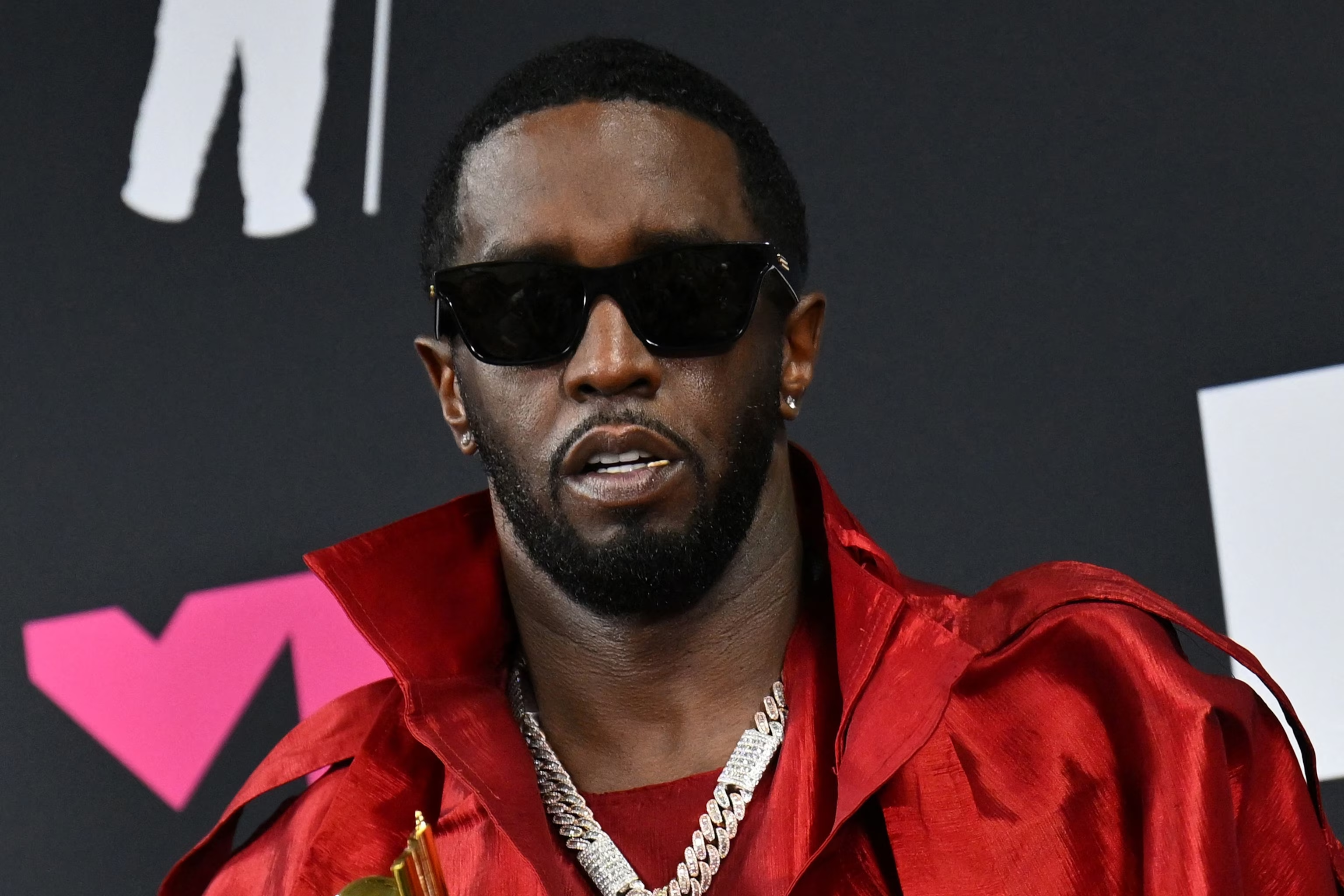
Despite heartfelt pleas from P-Diddy’s children, accompanied by moving videos and letters from some of society’s most respected figures, the judge remains firm and unmoved. It appears that the court has sentenced P-Diddy to four years in prison. It’s certainly a tough moment for everyone involved, and one can’t help but feel a mix of […]
Nigerian Entertainers: Challenges and Frustrations – Excerpts from WAJO (Dance) Project by AGUIKE (Alla-bama)

The WAJO (Dance) Project afforded me a distinctive and invaluable perspective from which to critically examine the complex and multifaceted challenges faced by Nigerian entertainers, especially those working in the frequently underacknowledged and marginalized roles such as backup vocalists, session musicians, recording engineers, producers, dancers, and choreographers. Through this engagement, I was able to gain […]
PMAN: The Unfolding Saga of an Enduring Crisis AGUIKE, alias alla-bama writes.

For those who choose to overlook the realities confronting the Performing Musicians Employers Association of Nigeria (PMAN), I offer a historical perspective grounded in firsthand experience and sustained activism. Having been involved in PMAN’s affairs for an extended period, my commitment has always been to advocate for a more transparent, accountable, and effective association. My […]
Sprinter Sha’Carri Richardson, arrested for domestic violence

Sprinter Sha’Carri Richardson, the reigning 100-meter world champion, finds herself at the center of a troubling incident that could overshadow her fiercely promising career. Last weekend, Richardson was arrested at Seattle-Tacoma International Airport on a fourth-degree domestic violence charge, following an alleged altercation with her boyfriend, fellow sprinter Christian Coleman. This news arrives mere days […]
ICE Arrest of South Korean Student & Peruvian Asylum seeker.

Outrage is swelling as ICE arrests a South Korean college student and a Peruvian asylum seeker mere moments after their routine court hearings earlier this week. Supporters and advocates alike decry these abrupt detentions as not just unjust, but as a calculated assault on some of the most vulnerable among us—immigrants striving to navigate the […]
Victoria Mboko Stuns World No. 2 Coco Gauff at National Bank Open in Canada

In a remarkable display of skill and determination, Victoria Mboko, the rising Canadian tennis prodigy, defeated World No. 2 Coco Gauff in straight sets at the National Bank Open. This victory marks a significant milestone in Mboko’s burgeoning career and signals her arrival as a formidable contender on the women’s tour. Having followed Gauff’s recent […]
WWE SummerSlam day 1 Recap: Gunther vs. CM Punk – A Disappointing Display

The highly anticipated showdown between Gunther and CM Punk at SummerSlam left many spectators puzzled and disappointed. Punk’s victory over Gunther lacked conviction and appeared poorly orchestrated, undermining what should have been a climactic moment. The infamous scene where Gunther’s face collided with the table, resulting in an excessive and implausible amount of blood, was […]

Donald Trump’s actions have deeply challenged our faith, as Alla Bama observes.

No Rap Songs In The Top 40 For The First Time In 35 Years


