
latest news
13 Arrested for Cultism, Possession of Firearms

Eight suspected cult members have been arrested for allegedly terrorising residents of Ikorodu, Imota, Agbowa, Owutu, Ijede, Ipakodo and Owode Onirin areas of Lagos State.
The Police Public Relations Officer, Bala Elkana, in a statement on Sunday, said the suspects were arrested by men of the Special Strike Force on Social Miscreants commissioned by the state Commissioner of Police to put an end to cult activities in the state.
He added that the suspects would be charged to court at the end of investigations.
Elkana said, “A deadly leader of the Aiye confraternity, Sikiru Samuel, aka Samora, 24, was arrested at Imota. Other members of his gang that were arrested were Adegboyega Ismaila, 19; Sunkanmi Shonubi, aka Napel, 19; Adigun Faruq, 18; Rilwan Akinwale, 30; Victor Uju, aka Zino, 18; Juwon Idowu, aka Lighter 18; Rasak Adebola, aka Bobo, 20; and Kehinde Keshinro, 18. The gang is responsible for a series of attacks and gang violence in Imota and its environs.
“One of such violent attacks happened on February 12, 2020, around 8.30 pm which led to the death of one David Nwanga, 30, of Araro Adamo area. The suspects were handed over to the Homicide Section of the State Criminal Investigation and Intelligence Department, Yaba, for discreet investigation. They will be charged to court.”
In another development, five suspects were arrested by the police for alleged possession of firearms and substance suspected to be Indian hemp.
Elkana said the suspects were intercepted where they were smoking the substance.
He said, “On February 14, 2020, around 11.30 pm, a team of police officers from the Oke Odo Police Station on patrol along Lagos/Abeokuta Expressway, intercepted some social miscreants at Katangowa refuse dump smoking dry weed suspected to be Indian hemp.
“On sighting the police, the miscreants took to their heels. The police gave them a hot chase and five suspects were arrested with one double-barrelled shotgun and three live cartridges. The suspects will be charged to court.”
Meanwhile, personnel of the command also arrested one Yusuf Akinradewo for allegedly snatching a car in the Ikorodu area of the state.
Elkana said after receiving complaints on the missing car, police officers who were detailed to investigate the case arrested the suspect, who had already initiated contact with a buyer.
He said, “The suspect took one Mitsubishi Montero Jeep with number plate GGE 620 AQ to one Wasiu Ogunsola of Omolojuwo Street, Dalemo, Sango-Ota, Ogun State, to a buyer.
“When the buyer demanded the original particulars of the vehicle, the suspect abandoned the vehicle and ran away. Police detectives eventually arrested the suspect and recovered another stolen vehicle from him, a Toyota Camry saloon car with number plate AGL 480 EC, belonging to one Alhaji Nurudeen Rasaki, of Isiaka Adekoya Street, Igbogbo, Lagos State.
“The owners of the stolen vehicles were contacted, and they confirmed that the vehicles were stolen from Ikorodu. The suspect will be charged to court, while the two recovered vehicles will be handed over to the owners on bond.”
Yesterday, Billboard deputy editor and Stereogum buddy Andrew Unterberger published a piece with some confusing implications: On last week’s Billboard Hot 100, there were no rap songs in the top 40. The same holds true for this week’s chart. It has been a very, very long since since we saw a Billboard top 40 with zero rap songs — 35 years, in fact. The last time that happened was the week of Feb. 2, 1990, when Biz Markie’s “Just A Friend” was sitting at #41, on its way to peaking at #9. This was the early crossover era, seven months before Vanilla Ice’s “Ice Ice Baby” became the first rap song ever to top the Hot 100. Up until very recently, rap has been a dominant force on the pop charts. But for the past two weeks, it’s been nowhere near the top. That’s weird. What does it mean?
As Unterberger points out, this is the indirect result of a recent Billboard rule change. A few weeks ago, Billboard instituted a new rule that moves hits into the “recurrent” category more often. This was a necessary step to remove the songs that never went away from the chart’s upper reaches, the situation that allowed new-jack radio staples like Teddy Swims’ “Lose Control” to take up real estate for upwards of a year. But one of the songs that was cleared off Hot 100 was Kendrick Lamar and SZA’s previous chart-topper “Luther.” This allowed other songs to rush in and full those chart spots. And right now, those new songs are… not rap.
On this week’s Hot 100, you will find zero rappers in the top 40. There are plenty of rappers in the Hot 100, but to find them, you’ll have to go all the way down to #43, where NBA YoungBoy’s “Shot Callin” currently sits. There’s obviously a lot of competition for top-40 spots this week. After three weeks, all 12 songs from Taylor Swift’s The Life Of A Showgirl are still in the top 40. Seven songs from the KPop Demon Hunters soundtrack are up there, too, so that’s pretty much half of the territory currently occupied. But that raises more questions. Why is rap music currently unable to produce its own Taylor Swift or KPop Demon Hunters?
I’ve been looking at online reactions to Andrew’s piece, and most of them fall along predictable lines. Some people think that rap is dead. Some think that last year’s Drake/Kendrick Lamar beef was an industry-created ploy to hasten rap’s commercial decline, that Drake in particular is a victim in all of this. Some dismiss it as a cyclical deviation, a trivial blip that’ll quickly fade. Some think it’s a snapshot of Trump’s America. All of those things are kind of true — all except Drake being a victim, anyway — but none of them really spells out what’s happening here.
For one thing, rap superstars are harder to come by. In a lot of the recent moments that rap has been dominant, Drake has had a lot to do with that. Drake has continued to rack up hits after the Kendrick Lamar beef, but he hasn’t been releasing music as quickly as he once did, and his star certainly seems dimmed. These days, it looks like he’s more interested in being a streamer than a hitmaker. Kendrick, the clear victor in that battle, simply doesn’t release new music that often. When either of those guys do put out more music, it’s practically guaranteed to make a chart impact. But both of those guys are aging millennial superstars, getting into their late thirties. (They’re both older than 36-year-old Taylor Swift.) Thus far, no young superstar has been able to play the same guaranteed-hitmaker role.
Again, there are reasons for that. Plenty of people who were on track to become rap superstars are now dead. Others are in jail. (NBA YoungBoy, the man with the current highest-charting rap single, was one of those cases before he got a Trump pardon earlier this year.) Some, like Young Thug, are not in jail, but their experience with the criminal justice system has affected both their music and their persona in heavy ways. These are problems! In lots of ways, the music industry has been failing to develop young rap stars as artists, letting the work of virality carry them instead. That means that rappers are less likely to make craven pop-crossover attempts, which is probably a good thing. But it might also be helpful if these guys were more invested in keeping rappers out of trouble. It’s not some record-label boss’ fault that Lil Durk is currently implicated in a murder plot, for instance, but someone, at some point, should’ve probably discouraged that kind of thing a little more persuasively.
It’s also true that the Hot 100 depends partly on radio play, and non-Black radio stations just don’t play rap music very often. That’s not a Trump thing. That’s been happening. Maybe it’s happening more now, though. If you look at this week’s top 40, you won’t even see the once-standard pop song with a rap feature. That was starting to happen back in 1990, the last time there was no rap in the top 40, but nobody employs the tactic anymore. The phrase “Sombr featuring Ludacris” does not appear on this week’s Hot 100, or anywhere else for that matter.
The change isn’t unique to the Hot 100, either. Anecdotally, I’ve been noticing a lot fewer rappers getting booked at big pan-genre festivals like Coachella. The Apple Music chart, which has historically been way more oriented toward rap than the Spotify one, doesn’t have any rap songs above #8 right now. (That’s where you’ll find NBA YoungBoy’s “Shot Callin” again.)
Some of those shifts are probably happening within the genre itself. Right now, plenty of the musicians on rap’s bleeding edge are making music that’s absolutely not built for mass-market acceptance. Playboi Carti has had some genuine pop-chart success in the past few years, but his skitter-jibber rage-rap descendants have not. The mainstream is not particularly eager to embrace experimental weirdos like Nettspend or 2hollis or Bladee, and if those guys do start crossing over, who’s to say that their music will still be recognizable as rap? Those prospects that I just mentioned are all white guys, too. That’s another factor.
The fact is that rap music is still all over the top 40; it’s just not being made by rappers. People rap on those KPop Demon Hunters songs. Taylor Swift still sometimes sings over trap beats. So does Morgan Wallen. Justin Bieber’s “Yukon,” currently the #36 song in America, is lyrically made up of rap-style flexes; it’s just that they’re being sung by a pop star. There’s plenty of rap-adjacent R&B in the current top 40 — Leon Thomas, Kehlani, Chris Brown and Bryson Tiller, Ravyn Lenae, Mariah The Scientist. Joji’s “Pixelated Kisses,” now at #38, even has a blown-out Playboi Carti type beat. If the rest of pop music is just steadily absorbing rap’s sonic innovations, isn’t that just an updated form of colonialism?
If you look just outside the top 40, you’ll find plenty of examples of rappers answering the question of how to cross over. NBA YoungBoy’s “Shot Callin,” an energetic and immediate burst of melodic hardness, is one such answer. Another is BigXThaPlug and Ella Langley’s country-rap crossover ballad “Hell At Night,” now at #50, and that one is arguably more country than rap. Look deeper and you’ll find Tyler, The Creator’s retro electro-funk jam “Sugar On My Tongue” (#51), Doja Cat’s disco-pop-plus-rapping “Jealous Type” (#53) and Cardi B and Kehlani’s rap&B love song “Safe” (#57). Doja and Cardi are both crossover pop stars, artists with multiple #1 hits, who released recent albums that didn’t really connect on a pop-chart level. It happens.
Gunna, Metro Boomin, G Herbo, and Loe Shimmy all have songs on this week’s Hot 100. So does Kid Cudi, whose pretty-terrible 2008 mixtape track “Maui Wowie” is currently enjoying the same kind of random-ass TikTok revival that’s led to Radiohead’s “Let Down” and Rihanna’s “Breaking Dishes” appearing in the lower rungs of this week’s Hot 100. It’s just that none of those songs, apparently, is currently as popular as Tame Impala’s “Dracula.” That’s some weird shit.
More than any genre in the history of American popular music, rap music became a dominant commercial force by retaining its identity as predominantly Black music. White people have made tons of rap music, often quite successfully, but we’ve never become the primary force. For multiple generations, rap has functioned as an engine of artistic expression and economic mobility for people who don’t often get to have either of those things. If that’s fading away, that’s cause for concern, especially if the stuff that is popular draws on rap’s sonic language.
But then again, maybe what’s fading away is just the viability of Drake’s hard-drive data-dumps. Right now, rap isn’t even just one world; it’s a series of different overlapping worlds. Rap has a ton of different thriving undergrounds, and those undergrounds don’t necessarily have to serve as farm teams for Hot 100 acceptance. My 13-year-old son still refuses to listen to anything except rap in the car, and his selection makes no sense to me. It goes MF DOOM into Lil Tecca into “Ten Crack Commandments” into Lil Uzi Vert. I think that’s great. Middle-aged men like me got to enjoy the Clipse reunion album this year, and we’re about to get new records from Danny Brown and Armand Hammer. If this music matters to you, then it matters. If the music doesn’t translate into crossover top-40 hits, maybe that’s somebody else’s problem.
October 30, 2025 11:03 AM By Tom Breihan
http://www.facebook.com/aguike
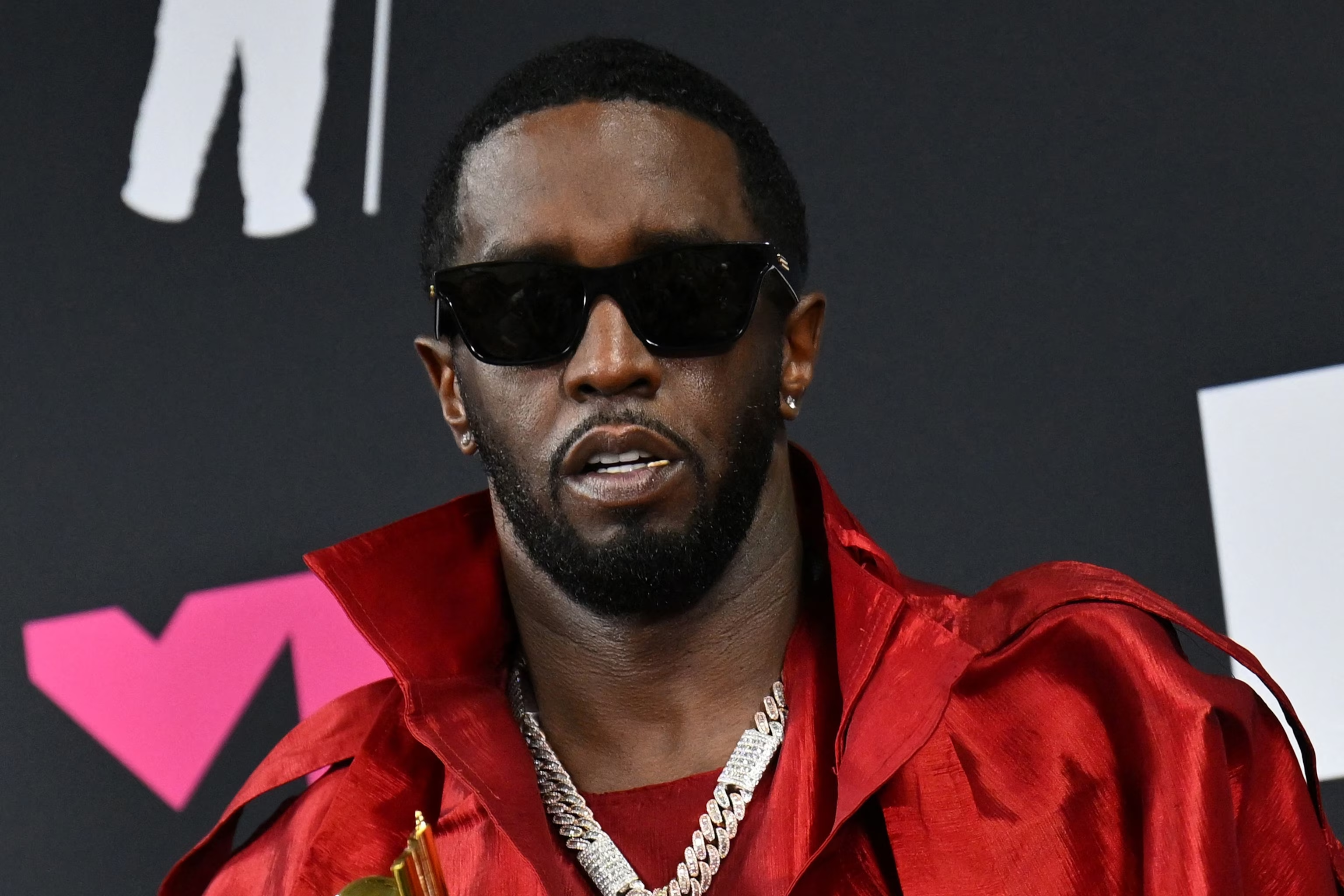
Despite heartfelt pleas from P-Diddy’s children, accompanied by moving videos and letters from some of society’s most respected figures, the judge remains firm and unmoved. It appears that the court has sentenced P-Diddy to four years in prison. It’s certainly a tough moment for everyone involved, and one can’t help but feel a mix of surprise and sadness at how things have unfolded. Sometimes, even the most powerful voices and emotional appeals just aren’t enough to change the course of justice. What can I say… life certainly keeps us on our toes!
Art
Nigerian Entertainers: Challenges and Frustrations – Excerpts from WAJO (Dance) Project by AGUIKE (Alla-bama)

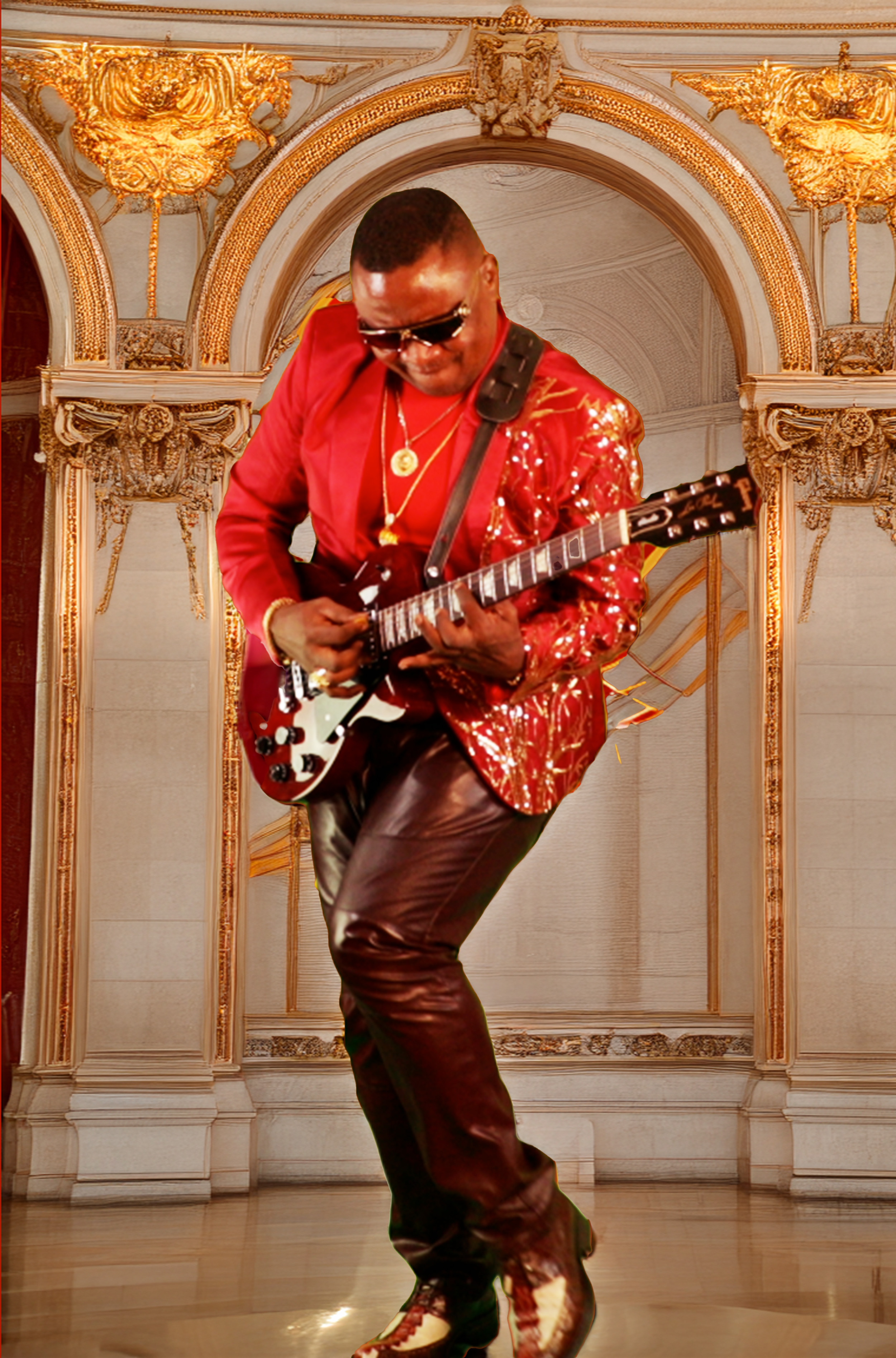
The WAJO (Dance) Project afforded me a distinctive and invaluable perspective from which to critically examine the complex and multifaceted challenges faced by Nigerian entertainers, especially those working in the frequently underacknowledged and marginalized roles such as backup vocalists, session musicians, recording engineers, producers, dancers, and choreographers. Through this engagement, I was able to gain an in-depth understanding of the structural, economic, and socio-cultural factors that contribute to the precarity and limited visibility experienced by these professionals within Nigeria’s dynamic entertainment industry. This vantage point also illuminated the intersectional dimensions of labor conditions, recognition, and artistic agency that characterize these occupations, thereby underscoring the broader implications for equitable representation and sustainable development in Nigeria’s creative sectors. This investigation reveals entrenched structural and economic inequities that undermine the sustainability of artistic careers in Nigeria’s contemporary music industry. The following discourse elaborates upon these systemic issues through detailed accounts and critical reflections amassed during the project’s production phase, with the overarching aim to contribute to a deeper understanding of the lived realities shaping Nigeria’s music professionals.
Initial Encounters: Economic Hardships Among Collaborators
At the project’s inception, it became immediately apparent that several of the backup singers and session musicians integral to the recordings were grappling with considerable financial precarity. One of the earliest and most telling incidents involved a request for an advance payment to cover transportation to a scheduled studio session. This took me by surprise, as such pre-payment requests were unfamiliar in my prior experiences within other music industry contexts and initially elicited a sense of reluctance and discomfort. The recording session itself was intended to be conducted alongside the esteemed studio engineer James Elepo—now regrettably departed—whose technical expertise was pivotal to the sound we sought to capture.
This initial episode was emblematic of deeper financial vulnerabilities faced by supporting artists, whose income streams often lack stability or predictability. Such vulnerabilities became increasingly apparent as the project unfolded; after compensating the guitarist generously for his studio contributions, he unexpectedly solicited advance payments for future performances scheduled months or years ahead. Although initially disconcerting, this demand underscored the tenuous financial circumstances that compel musicians to seek income security well in advance. These encounters starkly contrasted with expectations formed from more established music economies, highlighting the precarious economic landscape for Nigerian artisanal contributors.
A subsequent field visit to Nigeria to engage personally with the team intensified my awareness and concern. Witnessing firsthand the socio-economic conditions under which these artists operate, I experienced profound disappointment that, at this stage of their careers, many had yet to achieve the financial recognition and stability seemingly warranted by their talent and professionalism. In retrospect, I acknowledge and regret my earlier skepticism toward the advance payment requests, recognizing these as symptomatic of broader systemic deficiencies rather than isolated exceptions.
Broader Context: Economic Environment and Industry Practices
The precarious financial realities confronting Nigerian musicians, particularly those beyond front-line performers, are intimately connected to the evolving structure of the music production ecosystem, both locally and globally. The widespread adoption of digital production techniques and synthesized instrumentation has materially transformed cost structures and artistic practices. While technologically efficient, this digital paradigm often marginalizes live instrumentalists and vocalists, whose traditional roles have been diminished in favor of cost-effective pre-recorded or synthesized alternatives. This dynamic exacerbates financial instability within these support sectors, as opportunities for regular employment and fair remuneration shrink.
Moreover, the compensation framework for backup singers in Nigeria starkly diverges from models employed in well-established music markets such as the United States. Whereas Nigerian backup vocalists typically receive one-off upfront payments without any participation in royalty income, their American counterparts benefit from structured industry mechanisms designed to secure ongoing compensation. For example, organizations such as the American Federation of Musicians (AFM) and the Screen Actors Guild‐American Federation of Television and Radio Artists (SAG-AFTRA) administer intellectual property rights and distribute royalties generated from digital streaming and international licensing. Such institutional protections ensure that background vocalists and session musicians receive residual payments, thereby fostering sustainable career prospects.
In Nigeria, the absence of a robust, unified musicians’ union or effective collective management organization leaves backup singers, session musicians, engineers, and producers vulnerable. These artists frequently work under informal arrangements lacking enforceable contracts or clarity around their rights to royalties or other residual income. Instead, initial payments are often the sole financial rewards, with subsequent revenues from labels or collection societies accruing almost exclusively to lead artists and producers. This imbalance not only diminishes livelihoods but also diminishes incentives for talented musicians to sustain long-term engagement within the industry.
Challenges for Technical Professionals: Engineers and Producers
The plight of technical personnel such as recording engineers and producers parallels that of vocalists and instrumentalists, albeit with distinct nuances. Within industry contexts like the United States, producers commonly negotiate “points,” or percentages of master recording royalties, in addition to flat fees for their labor. Engineers, traditionally compensated by fixed fees, have experienced significant gains in royalty rights following legislative interventions such as the U.S. Music Modernization Act (MMA), which explicitly allocates digital performance royalties to producers, mixers, and engineers. These systemic frameworks enhance income streams and professional recognition for those shaping the sonic character of recordings.
Conversely, Nigerian engineers generally depend on express written agreements—often formalized via “Letters of Direction” issued by artists—to claim shares of royalty revenues. In the absence of such documentation, digital royalties rarely reach these critical contributors. This contractual opacity is further complicated by the lack of industry-standard agreements and poor legal enforcement, resulting in many highly skilled technical professionals receiving limited or no compensation beyond upfront payments.
Furthermore, it is crucial to recognize that royalties for producers and engineers are contingent upon proactive negotiation and clear contractual stipulations prior to release. Producers typically earn royalties linked to master recording rights rather than musical composition rights unless simultaneously credited as songwriters. This distinction is significant for revenue division and complicates equitable distribution in contexts lacking comprehensive contracts.
Consequences for the Industry: Declining Veteran Expertise
The cumulative effect of these economic, structural, and institutional shortcomings manifests poignantly in the shrinking presence of veteran technical professionals in Nigeria’s music industry. Many pioneering recording engineers and producers from the vibrant Nigerian music scene of the 1990s have either exited active participation or been marginalized due to insufficient remuneration and career support. This attrition jeopardizes the preservation of technical expertise and artistic continuity essential for the industry’s cultural vitality.
Institutional Gaps and the Need for Reform
Fundamentally, the financial and professional inequities described are inseparable from Nigeria’s broader absence of transparent institutional frameworks governing collective rights management and artist representation. Without credible musicians’ unions, collective management organizations, or standardized royalty collection and distribution mechanisms, the contributions of backup singers, session musicians, engineers, and producers remain undervalued and inadequately compensated. This systemic neglect not only imperils individual livelihoods but also undermines the foundations of a sustainable and equitable music industry capable of nurturing future generations.
To address these challenges, concerted efforts are required to establish industry-wide governance structures that codify rights, ensure transparent royalty administration, and facilitate contractual literacy among artists. Such frameworks should draw inspiration from successful international models, adapting best practices to the Nigerian cultural and economic context. Equally critical is fostering a culture of solidarity and mutual recognition within the music community—initiatives that consciously uplift veteran artists and technical professionals who have historically underpinned the industry’s development but remain financially marginalized.
The WAJO (Dance) Project: Affirming Legacy and Advocating Solidarity
The WAJO (Dance) Project aspires not only to generate an artistically compelling work but also to serve as a platform for raising awareness of these pervasive structural issues confronting independent Nigerian entertainers. It is an intentional affirmation of the value of veteran artists—figures whose substantial contributions have shaped the nation’s rich musical heritage yet whose commercial success and recognition remain limited or elusive. By foregrounding the voices and experiences of these pioneers, the project advocates for a paradigm of inclusivity, solidarity, and reciprocal support within the creative community, emphasizing that progress hinges on honoring those who laid the groundwork.
Moreover, this initiative exemplifies resilience amidst adversity. It illuminates the multifaceted challenges faced by independent artists—from resource constraints and technical skills deficits to the complexities of negotiating industry gatekeeping and maintaining diasporic networks. Through collaboration and sustained engagement, WAJO highlights pathways toward preserving Nigeria’s artistic legacy in the face of daunting systemic obstacles.
Conclusion
The experiences documented through the WAJO (Dance) Project render a microcosm of the broader systemic challenges besetting Nigeria’s music industry. The precarious economic conditions endured by backup singers, instrumentalists, recording engineers, and producers reflect not merely localized hardships but reveal structural deficits characterized by inadequate institutional protections, lack of formalized contractual practices, and minimal access to royalty streams. Without strategic reforms and collective advocacy to establish transparent, equitable, and enforceable frameworks for artist rights and remuneration, these indispensable contributors will continue to bear the brunt of an industry that undervalues their artistic labor.
To ensure the sustained vitality and global competitiveness of Nigerian music, it is imperative to confront these systemic inequities and champion models of governance and solidarity that uphold fairness and dignity. Only through such comprehensive efforts can the country’s rich cultural heritage be preserved and its artistic community empowered to thrive across generations. The WAJO (Dance) Project thus stands as both an artistic endeavor and a call to action, inviting stakeholders at all levels to recognize and address the complex realities defining independent artistry in contemporary Nigeria.
Aguike, also known as Alla-bama, is a singer, songwriter, music producer, and sound Engineer.

For those who choose to overlook the realities confronting the Performing Musicians Employers Association of Nigeria (PMAN), I offer a historical perspective grounded in firsthand experience and sustained activism. Having been involved in PMAN’s affairs for an extended period, my commitment has always been to advocate for a more transparent, accountable, and effective association. My activism predates the tenure of Ugly Okafor; I have long voiced concerns regarding PMAN’s leadership. Over the years, I have documented extensively the multifaceted challenges facing the nation’s largest association representing Black musicians globally. These writings could well serve as the foundation for a compelling dramatized series, chronicling the struggles and missed opportunities of a pivotal institution, essential knowledge for future generations of artists and administrators alike.
To contextualize this history, it is crucial to recall the tenure of the late Femi Lasode—may his soul rest in peace. Lasode was an accomplished individual from a prominent family with substantial business interests. Before his presidency, he managed his father’s multi-million naira enterprise, a position indicating significant business acumen and leadership capability. Yet, shortly after the esteemed Sunny Ade stepped down as PMAN president, Lasode was persuaded by a cadre of influencers—including the late Ogbonaya Amadi and the late Harry Mosco—to assume the presidency of the association. It is important to highlight that I had already distanced myself from PMAN by then, as the association’s trajectory no longer aligned with my aspirations for Nigeria’s music community. In the 1990s, despite some musicians gaining commercial recognition, many were struggling financially, barely meeting basic needs, and PMAN lacked the institutional support mechanisms to protect or advance their livelihoods.
Lasode’s tenure centered significantly on establishing the Musicians Hall of Fame, a well-intentioned but ultimately limited initiative. I publicly criticized this focus, reasoning that had previous presidents fulfilled their responsibilities diligently, Lasode would not have had to relinquish his successful business career to step into an association beleaguered by systemic dysfunction and internal politics. While Lasode was a fundamentally principled and competent man, he was arguably ill-prepared for the complexities and demands of steering such a volatile organization. Tragically, this acceptance coincided with his financial decline, illustrating the personal toll of inheriting a mismanaged institution.
More disheartening is the association’s response—or lack thereof—when Lasode’s health deteriorated seriously, and he required international medical treatment beyond his financial means. The association remained conspicuously silent and inactive at a time when solidarity and support were critical. Only after Lasode’s passing did factions emerge, soliciting funds. Such posthumous gestures raise profound ethical questions: for whom precisely are these funds intended?
This lamentable episode is symptomatic of broader, chronic challenges afflicting PMAN. Those who endured these turbulent years remain steadfast in their efforts to restore the association’s functionality and to ensure it serves the interests of all musicians, especially the vulnerable and overlooked. However, despite prolonged stagnation and repeated crises of leadership, some members continue to engage in opaque maneuvers, seeking external “saviors” to rescue PMAN from its prolonged state of dysfunction. These individuals often court wealthy or influential figures, coaxing them to assume leadership roles. A recent encounter with a woman identified as “Hajiya,”—who claimed the presidency without any official standing or legitimacy—epitomizes the problematic dynamics within the body. She told me she was the authentic PMAN’s President!
This episode reflects a recurring pattern within PMAN, wherein actors with little grounding in the realities of effective leadership or the association’s operational demands vie for PMAN presidency. Their motivations frequently appear less aligned with genuine commitment to advancing the association’s mission and more oriented toward the social capital and prestige conferred by holding the presidential title. In the Nigerian socio-cultural milieu, where honorifics and formal titles carry substantial weight, these roles are often viewed as symbols of status rather than platforms for service. The pursuit of such positions, divorced from meritocratic principles, exacerbates the instability and effective leadership deficits that have plagued PMAN for decades.
The implications of this trend are severe. It casts doubt on the integrity of leadership selection processes and raises urgent questions about how legitimacy is established, conferred, and maintained within the association. For PMAN to transform into a sustainable and professionally managed entity, it must institute transparent, merit-based leadership criteria. Equally important is fostering a culture that prioritizes the collective welfare of members and the advancement of the music industry, rather than individual ambition and external perceptions of influence.
Let me back up a little bit, and let’s consider, as a case study, Ugly Okafor. Okafor was cognizant of Femi Lasode’s critical health condition before his death, but he miserly donated a mere 150,000 naira after he died. This is particularly egregious given Okafor’s control over significant association assets and funds—most notably, his unilateral sale of 1.3 hectares of PMAN land, the receipt of over 200 million naira payment from Olusco, and management involvement of millions of naira belonging to PMAN. Despite these considerable resources under his stewardship, Okafor failed to mobilize meaningful support for a former president in dire need. This dereliction is emblematic of deeper systemic problems: mismanagement, lack of accountability, and misplaced priorities.
The underlying truth is that had PMAN been governed with genuine integrity, capable leadership, and accountability, tragedies such as Lasode’s neglect would have been preventable. The failure to protect and support founding and past members has compromised not only individual lives but the institution’s reputation and efficacy. In the absence of functional governance structures, the association is left vulnerable to stories of neglect, opportunism, and posthumous appeals for charity—none of which reflect the robust, professional body PMAN ought to be.
To address a common misconception, some have claimed I was once an ally of Ugly Okafor. It is imperative to clarify that while his tenacity and street-savvy maneuvers have allowed him to maintain a grip on power, his leadership is characterized by greed, callousness, and corruption. Without these traits, his legacy might have warranted recognition as an accomplished administrator. Nonetheless, he has mastered the art of political survival, manipulating access, manipulating funds, and engaging in patronage networks to sustain his influence. His persistence is less a testament to effective leadership and more an indication of systemic weaknesses that allow entrenched actors to dominate the association’s affairs.
The depth of Okafor’s entrenchment is profound. Efforts to dislodge him require more than rhetoric; they demand strategic interventions grounded in institutional reform, legal frameworks, and the mobilization of a principled constituency committed to change. The reality is that PMAN’s fight for renewal is not merely a contest of personalities but a struggle to reclaim the association’s mandate as a credible advocate and protector of musicians’ interests.
In conclusion, the continual cycle of crisis within PMAN is symptomatic of broader socio-political and institutional dysfunctions afflicting many professional associations in Nigeria. Moving beyond this impasse requires a concerted commitment to transparent governance, meritocratic leadership selection, ethical stewardship of resources, and the establishment of sustainable support mechanisms for members past and present. Only through such comprehensive reforms can PMAN fulfill its promise as the largest and most influential association of Black musicians worldwide and truly serve those who dedicate their lives to preserving and advancing Nigeria’s rich musical heritage. Until then, the unending drama that has come to define PMAN’s narrative will persist, to the detriment of its members and the cultural legacy it ought to protect.
Rest in peace, Femi Lasode.
Aguike is the publisher of New YorkGM
-

 latest news2 years ago
How FBI nabbed Frank Ikechuwku newly elected Chairman of Chairman of Ogbaru LGA in Anambra state!
-

 Art2 years ago
Beyoncé’s Album of the Year: A Lesson for Nigerian Musicians, by Allah-Bama (Part 3)
-

 Entertainment2 years ago
PMAN: Between Greed, Corruption, & Leadership By Aguike, alias Allah Bama.
-

 Inside America2 years ago
New York City: The Aftermath of Donald Trump’s Victory-allah-bama reacts
-

 latest news1 year ago
Ghanaian National Kidnapped in Nigeria Begs for Mercy (See full Video)
-

 Art2 years ago
Beyoncé’s Album of the Year: A Lesson for Nigerian Musicians, by Allah-Bama (Part 2)
-

 Art1 year ago
Justice for Late Gospel artist, Osinachi, Husband sentenced to death.
-

 Art2 years ago
Beyoncé’s Album of the Year: A Lesson for Nigerian Musicians, by Allah-Bama-(Part1)
-

 Featured2 years ago
op-ed: My Encounter with a Rogue Asylum Seeker-Musician AGUIKE speaks
-

 latest news1 year ago
Nigerian Police detention of PMAN leaders: gross injustice and coverups